Josh Kirouff Kirouff Games, Newbury Park, California
joshkirouff@gmail.comEmail me

I direct AI coding agents to ship real products and build the checks that catch them when they’re wrong.

Since 2025 I’ve used Claude Code and OpenAI Codex to ship five live iOS apps and a 3D social game that runs in the browser, and to build a RISC-V CPU core and a quantum resource estimator. The agents write the code. My part is the grader’s part: acceptance tests before work starts, independent reviewers set against the builders, and a hunt for work that passes and is still wrong.

Before that, 4+ years leading teams at Amazon and MOD Pizza.

Email me Call (805) 377-0404 See what shipped

Open to relocation. Authorized to work in the U.S.

One agent rewrite, two verdicts

QuantumTriage, negation guard, rewrite 4 of 5

Unit test suite218 of 218 passed
Fatal verdicts that survive one harmless added sentence0%
Eval corpus, same build53.8% false negatives
Every unit test was green while one harmless added sentence was enough to switch off every “this won’t work” verdict. The corpus tests what the tool is for, so it flags the same build. How the eval works
  • 5

    iOS apps live on the App Store

  • 270/270

    checks passing in QuantumTriage, a quantum resource estimator

  • 0

    server errors with 300 bot players load-testing Palm Social on staging

  • 200+

    people trained as a Zone Leader at Amazon

Shipped and live

Each of these was built by AI coding agents working under my direction. I set the scope and the acceptance criteria, reviewed the evidence, and signed off every release. All of it is public today.

The town plaza in Palm Social: cafés, palm trees and a fountain under a blue sky.

Palm Social

A 3D social game that runs in the browser: a coastal town with jobs, house building, friends and chat. Public since October 2026, and 756 commits since the first one in September.

Three.js, React, Cloudflare Workers, D1 and Durable Objects, Stripe. Email, Google and Apple sign-in.

playpalmsocial.com
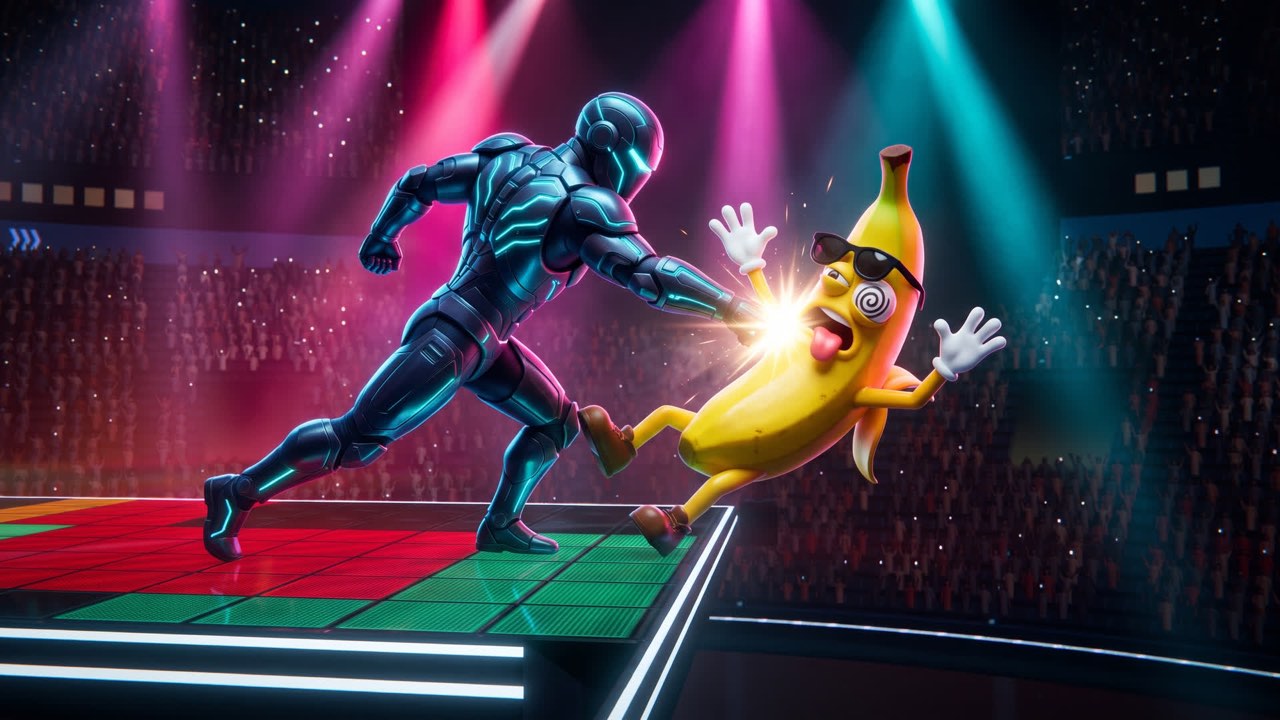
Knockout Jumper key art: an armored fighter punches a banana in sunglasses off a glowing LED arena floor.

Knockout Jumper: Brawl Royale

A free-for-all brawler: shove, hit and block rivals off a giant LED floor with no walls. Last one standing wins. Online PvP in the browser and on iPhone.

kojumper.com

Five apps on the App Store

Seller: Josh Kirouff. Details from Apple’s listings, November 2026.

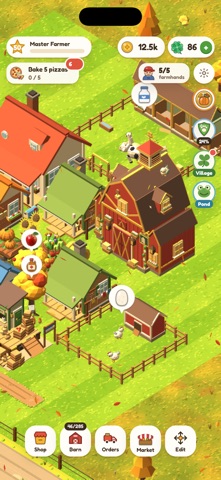
  • Clover Barn screenshot: a farm with a red barn, fields and animals.
    Cozy Farm Game: Clover Barn

    A cozy 3D farming game that plays fully offline. Hire an idle farmer, grow crops, bake, fish and fill orders.

    30 languages. Rated 4.9 from 7 ratings.

    View on the App Store
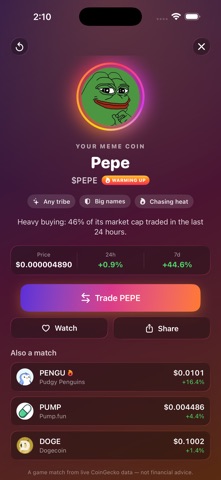
  • Crypto SPY screenshot: a meme coin match card with live price and a trade button.
    Crypto SPY: Trading Simulator

    A trading simulator with real market prices and virtual money, plus a leaderboard. Learn how markets move without risking a cent.

    18 languages. Live since September 2025.

    View on the App Store
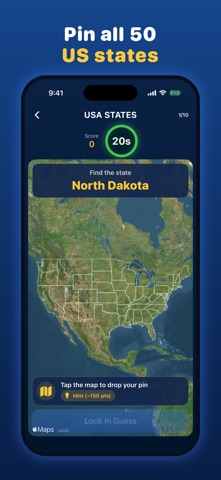
  • Atlas Arena screenshot: a satellite map of the United States asking the player to find North Dakota.
    Geography Map Quiz Atlas Arena

    See a photo of a famous place, then drop a pin on the satellite map. Online 1v1 through Game Center, CPU rivals and region quizzes.

    6 languages. Released November 2026.

    View on the App Store
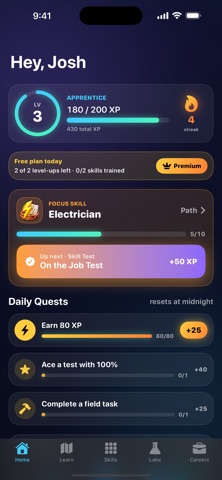
  • SkillUp screenshot: a home screen with a level ring, focus skill Electrician and daily quests.
    SkillUp: Learn a Trade

    Learning a trade as an RPG: 50 skills across 8 categories, from electrician and welder to UX design, each levelled from Novice to Master.

    Released November 2026.

    View on the App Store
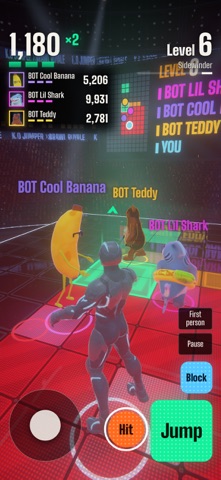
  • Knockout Jumper screenshot: fighters on a neon LED floor with Hit and Jump buttons.
    Knockout Jumper: Brawl Royale

    The iPhone version of the arena brawler, with online PvP and offline matches against clearly labelled bots.

    Released November 2026.

    View on the App Store

Catching agents when they’re wrong

Unit tests check what their author thought to check, and agents are very good at passing them. The work I care most about is the check that notices when green tests and a broken product show up at the same time.

QuantumTriage: an eval for the eval

A Python tool (about 6,600 lines, 270 of 270 checks passing) that asks whether a problem has structure a quantum computer can exploit, then estimates the fault-tolerant cost.

It matches Gidney and Ekerå’s 2019 RSA-2048 count of 6,189 logical qubits, and lands one code-distance step below their 27, a gap it reports instead of hiding.

  1. Five rewrites, all green

    Agents rewrote the negation guard five times, and every version passed the unit suite. The fourth passed 218 checks while losing 100% of genuine fatal verdicts. One appended sentence, “The team does not have a GPU cluster,” disarmed every one.

  2. Test what the tool is for

    I directed a behavioural corpus: labelled real-world descriptions plus meaning-preserving edits (incidental negations, question phrasing, casing), scored on false-negative and false-positive rates. Against that build it reports 53.8% false negatives.

  3. Audit the eval itself

    Every edit in the corpus appended a clause, so when prepended clauses destroyed 100% of advantage verdicts, the corpus still printed 0.0%. Later, 117 of 119 regexes could be deleted with every rate still at 0.0%.

  4. Mutation-test the grader

    A health check now breaks each mechanism on purpose and fails if the corpus doesn’t notice. A green score can no longer come from not looking.

  • Independent reviewer agents, not self-reports. One review cycle found 8 defects, each confirmed by running it before anything was fixed.

  • A cross-check agent attacked an earlier cycle’s work and found 4 more, including “two confidently-stated claims that the tool’s own numbers contradicted.”

  • A benchmark was passing “by coincidence rather than by correctness”: two unit errors cancelled each other out.

  • 21 of 43 benchmark rows only re-derive the tool’s own formulas, so they are labelled as self-checks instead of passes. Three real misses stay in on purpose, with their error priced.

Rules my agents work under

From the rulebook (AGENTS.md) I set for Palm Social. Before each phase an agent must state the objective, expected files, risks and measurable acceptance tests, and every work record must name the exact model IDs behind design, implementation and review. The project holds 510 dated evidence folders.

“Quality scores require evidence and user judgment, not self-awarded numbers.”

“A successful build or functional test never establishes that rating.”

“Never claim FPS gains from a CPU-only benchmark.”

Why every task now gets an independent final check

A multi-agent Palm update had passed its own tests and agent code reviews. A walkthrough of the real build in a browser still found two bugs: a quest button that did nothing unless you stood at your lot sign, and a helper banner covering the Build buttons. Both were fixed, and since then nothing is marked done until a separate, independent agent has read the diff, run the tests and looked at the result.

“Flaky” was a misdiagnosis

After an iPad purchase bug got SkillUp rejected in App Review, its purchase tests were written off as flaky. They were traced to the test harness instead: in Xcode’s StoreKit test session, clearing a simulated error left every later purchase failing. The tests now reset the session, and SkillUp has since gone live.

Security and bot defense

Before Palm Social opened to the public, I had every API route audited for abuse and leaks. Twelve findings came back, ranked by severity. A selection of the fixes:

Selected findings from the Palm Social launch security audit
SeverityWhat was wrongWhat changed
High No rate limits on most routes, so database writes were unbounded. One shared guard on every route: same-origin check, body-size caps, per-player and per-IP windows.
High The AI dialogue route could drain Anthropic API credits: no origin check, no body limit, and a throttle that trusted the spoofable X-Forwarded-For header. Same-origin check, an 8 KB body cap, per-profile and per-IP windows. The spoofable header is ignored.
Medium Unicode abuse in chat and names: bidi overrides, zalgo text and invisible “blank” names. Text is normalised, bidi overrides and invisible characters are removed, combining marks are capped at 3 per character, and names need a visible letter, number or emoji.
Medium No chat moderation at all. Reports that auto-hide a line at 3, ban and mute, 6 lines per 10 seconds, and a word filter with tests that keep words like Scunthorpe and cocker spaniel clean.
Medium Internal database errors were echoed to players. Players get fixed messages. The server writes structured logs with no bodies, cookies or tokens.
Low to medium CSRF. Requests without an Origin header weren’t checked. Cross-site requests are refused on every state-changing route.

A test that keeps it fixed

The token-leak test drives two real player profiles through every route (80 responses across 16 routes at audit time). It fails if any response contains a session token, SQL error text or a stack trace.

Coins that can’t be double-spent

Every coin movement is one conditional SQL statement or trigger. Race tests fire simultaneous requests at the real routes: five finishes of one job pay once, and a one-print edition raced by five buyers sells once. A database trigger refuses any negative balance.

Accounts

Passwords are hashed with PBKDF2-SHA256 at 100,000 iterations (the Workers maximum). Sessions and email codes are stored hashed. Repeated failed logins lock the account temporarily.

Sign-up bots

Throwaway email domains are refused at sign-up, and the sign-in and sign-up paths are rate-limited per IP at the edge.

Systems and research

Built with agents, like everything here. In each one, the interesting part is the measurement, including the results that went against me.

Load-testing Palm Social

13,020 → 0 server errors, before and after the fixes

A bot harness drove simulated players into a staging copy of the game. Before the fixes, 200 bots produced 13,020 server errors. After them, 300 bot sessions ran with zero 5xx errors and a sync p95 of 0.91 s. A 400-bot run was used on purpose to find the edge, and launch capacity was capped below it.

K1, a RISC-V CPU in Verilog

103/103 programs matched across three implementations

An RV32IM processor in two versions, single-cycle and a 5-stage pipeline, with its own assembler and a Python reference simulator that shares no code with the hardware. The trace checker itself caught 9 of 9 deliberately injected bugs. The pipelined core reaches about 53–60 MHz on a Lattice ECP5, in simulation and static timing only, with no board yet.

A forecasting eval lab

46,450 logged predictions from 16 forecasting engines

They were scored against market prices with Brier scores, calibration bins and walk-forward train and test splits. Most gains found in training turned negative out of sample, and a surface-adjusted tennis Elo lost to the closing line (Brier 0.218 against 0.205). Both results were reported as found.

Leading people

Before agents, I led people on the floor. The habit carries over: measure what actually happened, not what the report says.

  1. Zone Leader, Amazon

    Woodland Hills, CA. April 2020 to January 2022.

    Led 30 to 100 associates per shift. Trained more than 200 employees, including ASMs, zone leaders and associates. Worked through operational problems on the floor and spoke to large groups.

  2. Shift Manager, MOD Pizza

    Newbury Park, CA. June 2017 to January 2020, promoted from Team Member.

    Opened and closed the store and ran the shift: delegation, service and upselling. The store was rated MOD’s highest in California on Yelp (4.7+).

Associate’s degree in Business Administration, Moorpark College. EMT and BLS certified.

How I run agents

The loop I now run on every project, from a farm game to a CPU.

  1. Spec and acceptance tests first

    Every phase starts with the objective, the files it should touch, the risks and measurable acceptance tests. If I can’t say what done looks like, the agent doesn’t start.

  2. Two agents at most, in separate lanes

    At most two agents at once, each in its own git worktree, with locks around shared resources like builds and GPU benchmarks.

  3. An independent agent checks the work

    Nothing is done until an independent check by a separate agent has read the diff, run the targeted tests and looked at the result where a user would see it.

  4. Evidence, not self-reports

    “Done” from the agent that did the work is a claim, not a finding. Reports say what passed the check, what is still waiting, and which model did what.

Tools: Claude Code (subagents, skills and persistent memory) and OpenAI Codex, often on the same project. Repeated work goes into reusable Claude Code skills, such as an App Store asset validator.